
Young Fashion Show: from 1 in 74 to 1 in 12 Google visitors applying
The client
Young Fashion Show produces runway shows for kids, teens and adult models in New York, Los Angeles, Miami and Chicago. Families, models and brands were already finding the show on Google every day.
The problem
The old website was full of great content, but it all looked mixed together. Young Fashion Show has six very different audiences: kids and teen models and their parents, adult models, designers and brands, sponsors and partners, agencies and scouts, and media and press. Many of them had no clear path, and some had no path at all. The application was a third-party form, and adults could not apply. In the month before the new website, only 1 in 74 Google visitors applied.
What we changed
We started with the buyers, not the design: 6 calls and 266 messages with the client, then 47 sources and 908 real buyer journeys from their CRM, to see where people stopped. That showed six kinds of buyer, so each of them got its own door. Then we rebuilt the website page by page around a customer journey for each audience.
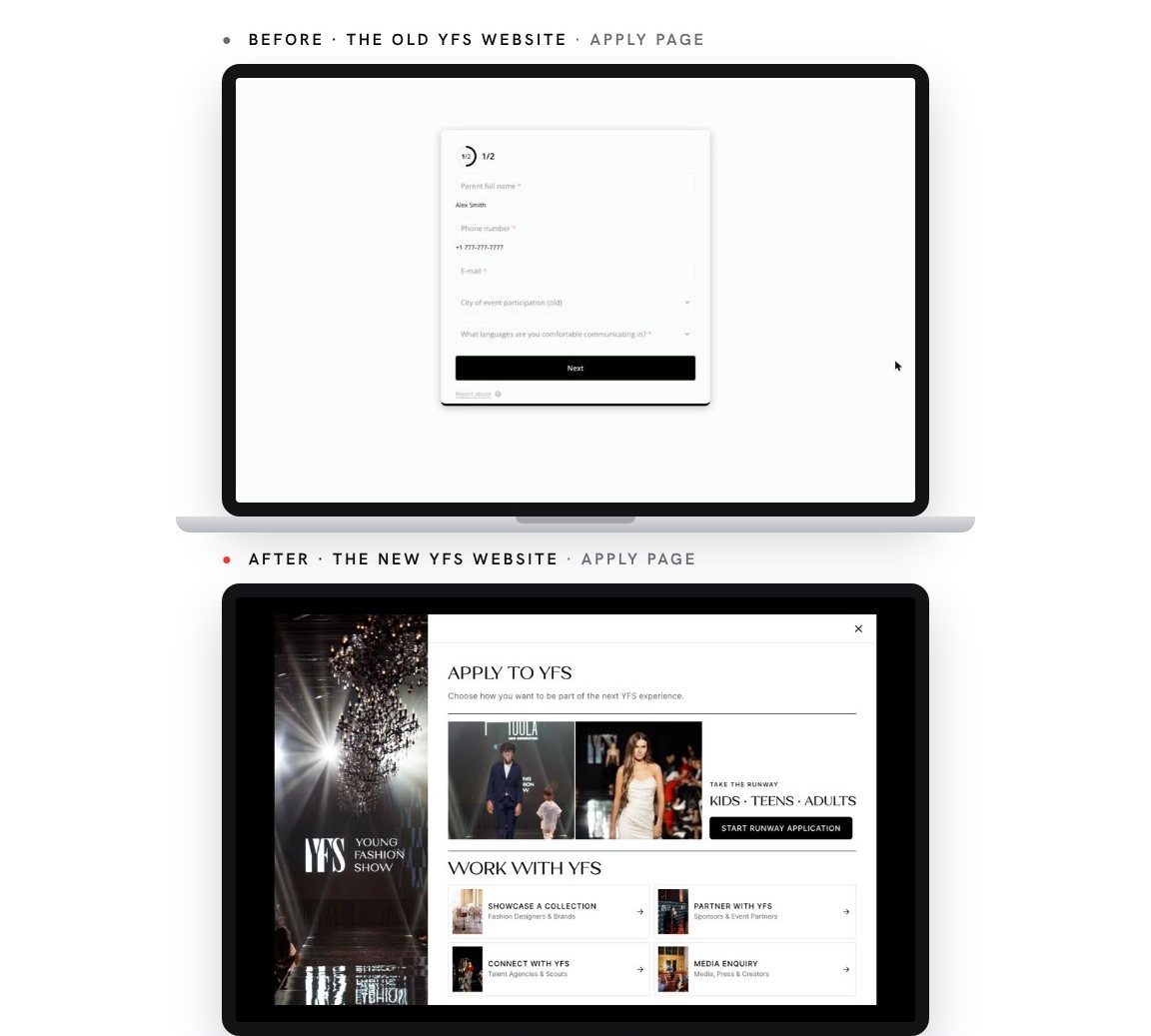
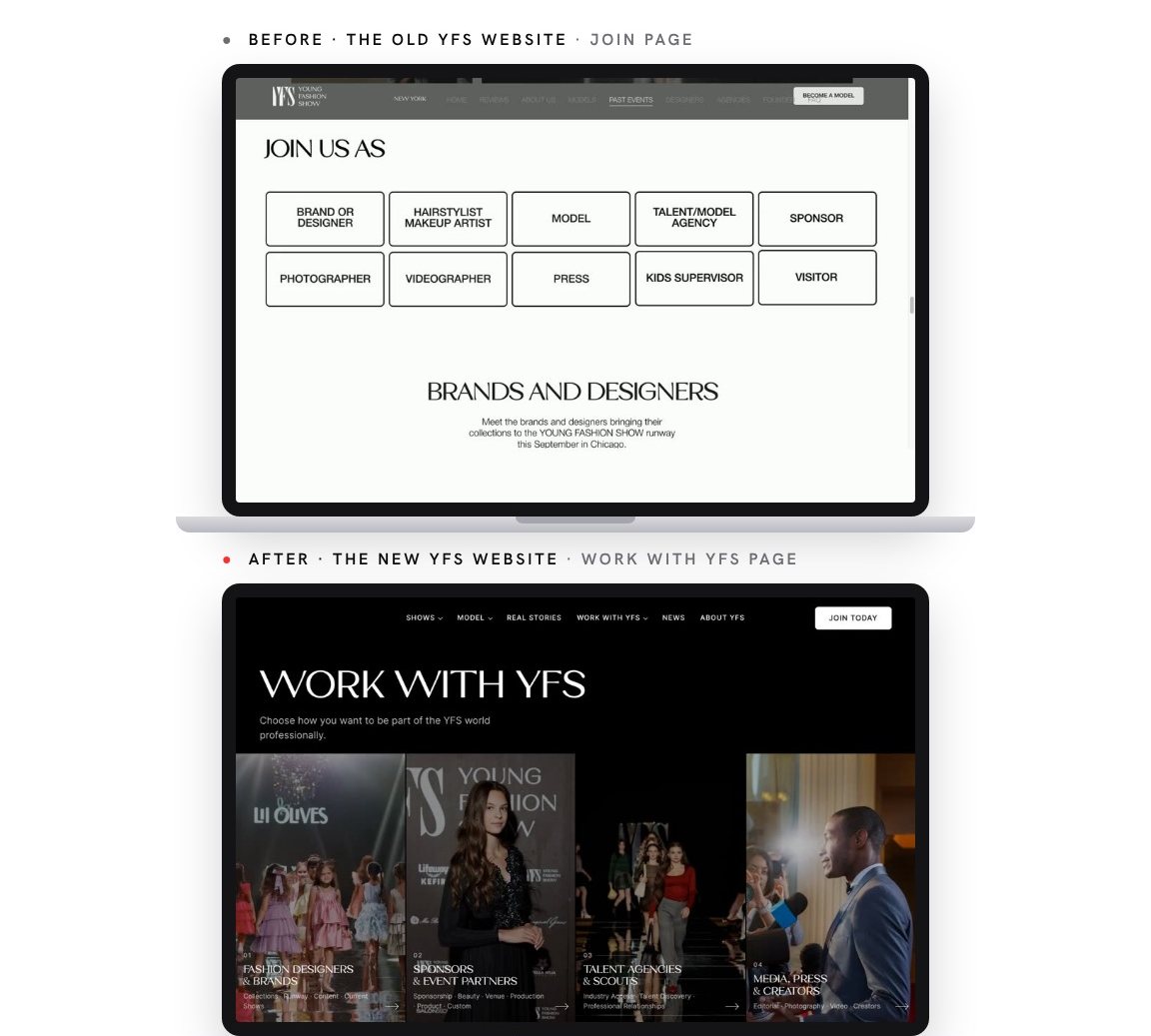
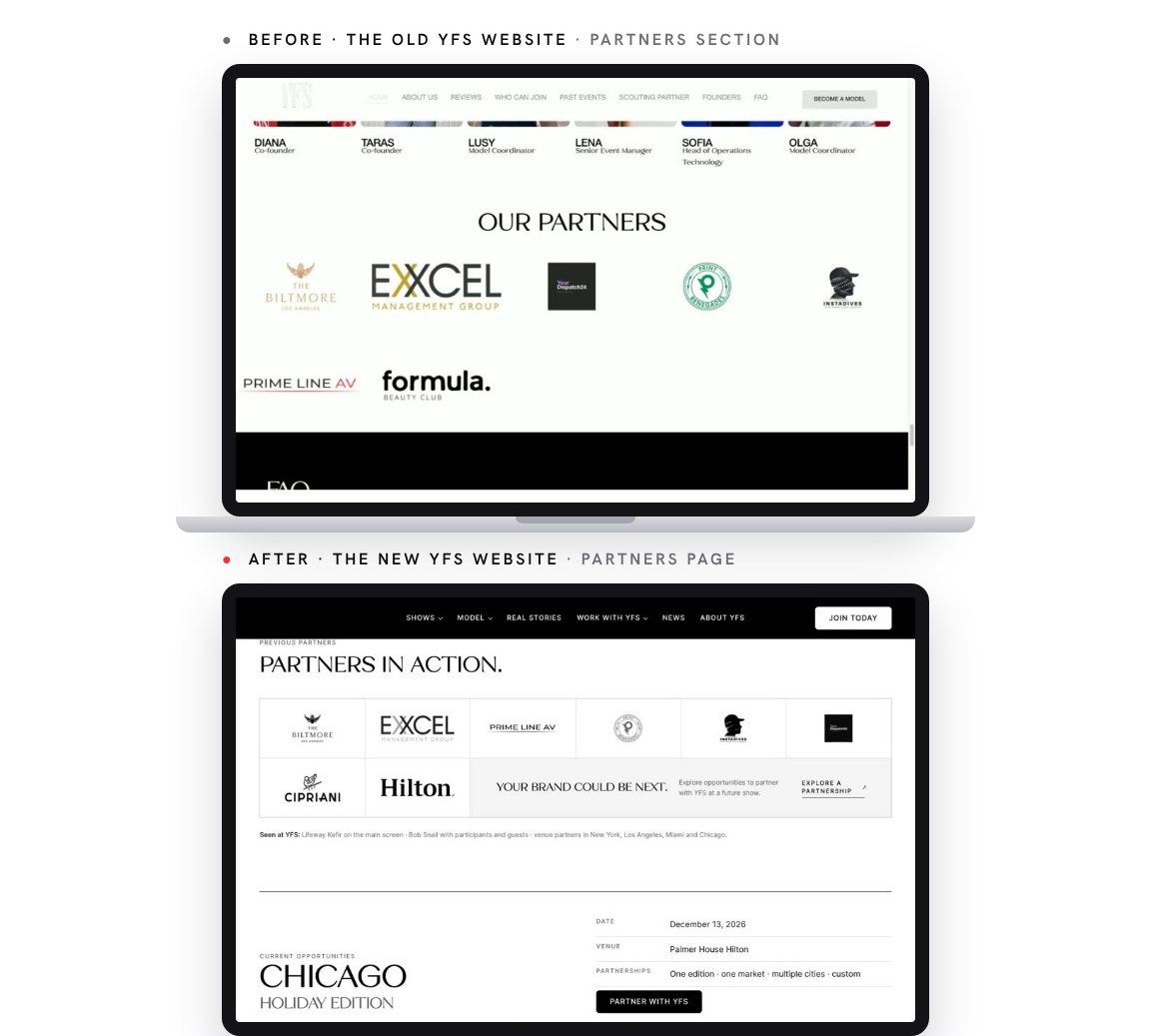
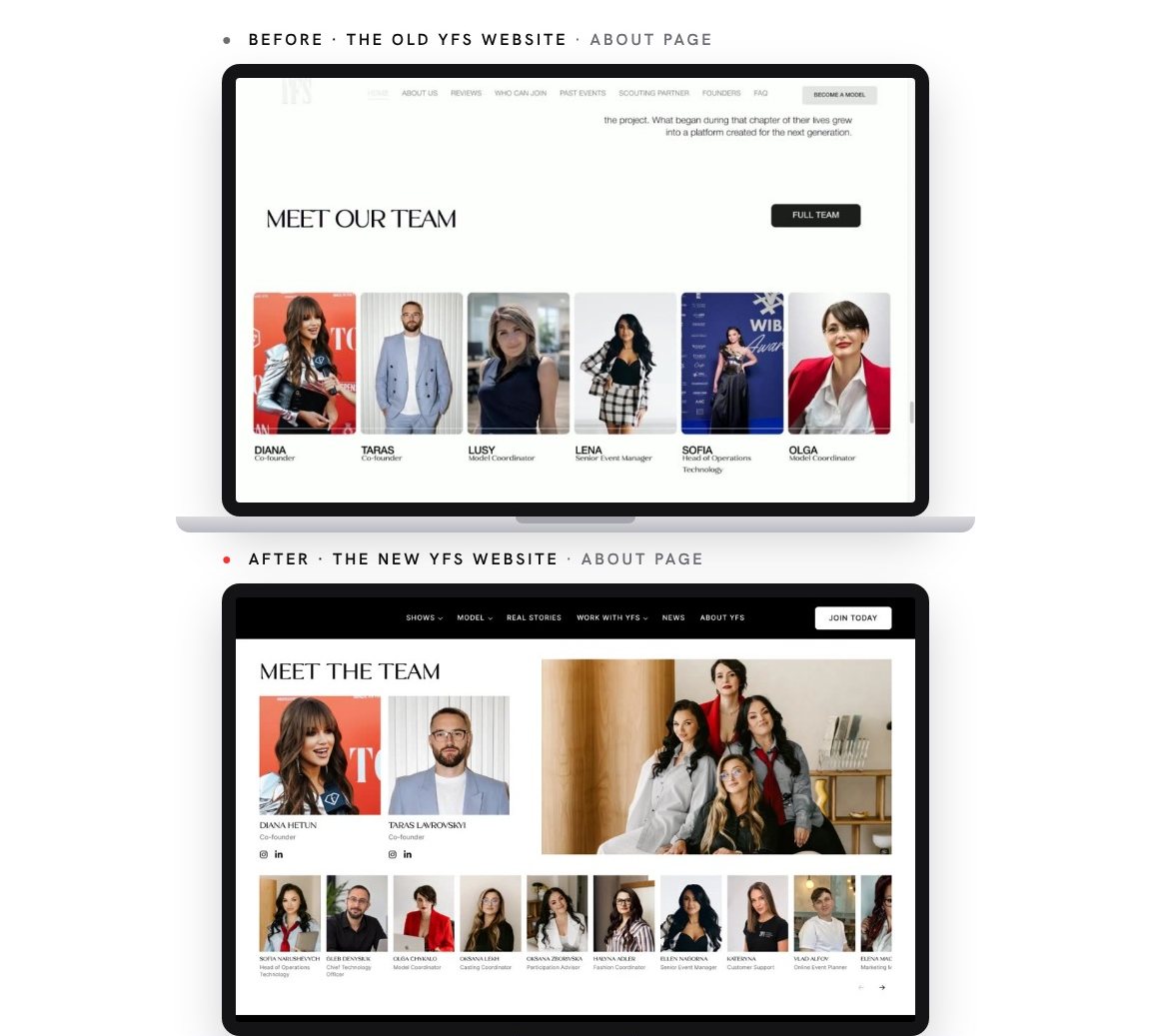
The shows page now sells the next edition city by city, each with its own button to apply. 22 pages of design rules keep every page looking like the show. Behind it sit 364 steps of design, development, set-up and testing, and 343 automatic checks, so nothing breaks when the site changes.
Every application in the CRM
The new application runs on one automation. A single form handles eight kinds of request, and every answer lands in the client's CRM the moment it is sent, day or night. Two children from the same family each get their own deal, and a second application from that family joins the open deal instead of creating a copy. Every applicant arrives with their source attached, across 19 channel groups, so for the first time the team can see which channels bring applications. Before launch we ran 145 automatic checks on this part alone, and all 145 passed.
Found by Google and AI
We let 10 search and AI crawlers in, wrote AI assistants a map of the site, and labelled every page with 22 kinds of structured data, so search engines and AI assistants understand what is on it. We mapped every section for search, 2,515 rows of it, listed every page for Google, described all 34 videos for search and ran Google's own test on every page.
Then we tested it across 7 AI assistants with 41 real questions, asked the way a parent or a sponsor would ask them. Before launch, on 17 and 18 October, ChatGPT named Young Fashion Show in 29 of the 41. Ten days after launch we asked the same 41 questions again: ChatGPT named the show in 34 of 41 and linked to its website in 31, and Google's AI Overviews named it in 16, up from 9.
The result
Right after launch, in the very first week, 1 in 12 Google visitors applied (8.1%), up from 1 in 74 (1.4%). That is +497.1%, with about the same number of people arriving from Google as before. The change came from what happens after the click: the page, the form and the follow-up.
How it was made, in three videos
What this means for your business
If people already find you but don't apply, book or buy, more traffic is not the first fix. We read your buyers' real journeys, find the step where they drop off, then rebuild it: the page, the form and the follow-up. See what we do for fashion and beauty brands, or read what to check first when a website gets traffic but no enquiries.